Traditional lead-acid batteries were widely used in golf carts due to their low cost and safety. However, with the development of lithium batteries, golf carts have switched from lead-acid to lithium batteries. Below, we will introduce the changes and advantages that the lead-acid to lithium conversion brings to golf carts.
I. Lead-acid batteries
Lead-acid batteries are well-known for their low price and high safety, and are widely used in many industries.
However, due to its relatively low density, large size, poor low-temperature performance, and short lifespan, lithium batteries have more advantages.
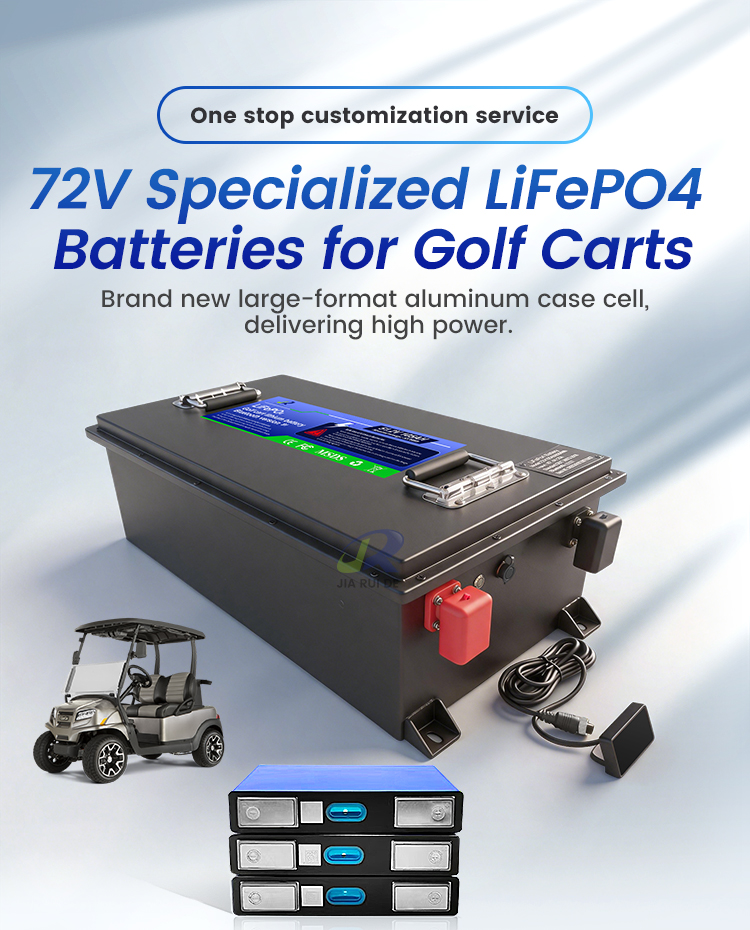
Lithium-ion batteries have high density, small size, low space consumption, long range, and long lifespan, making them more suitable for use with golf carts.
Lithium-ion batteries have an energy density of 200Wh/kg, which is three times higher than that of lead-acid batteries.
With the same capacity, the weight is reduced by 60%, and the overall vehicle payload is increased by 30%.
Discharge efficiency increased to 95% (compared to only 70% for lead-acid batteries); climbing ability improved by 20%; top speed increased by 15%.
The lithium battery supports fast charging and can be fully charged in 1.5 hours (while lead-acid batteries require 8-10 hours).
Finally, for information on which type of lithium battery is best suited for golf carts, please refer to this article: "Which Lithium Battery is Best for Golf Carts?"